


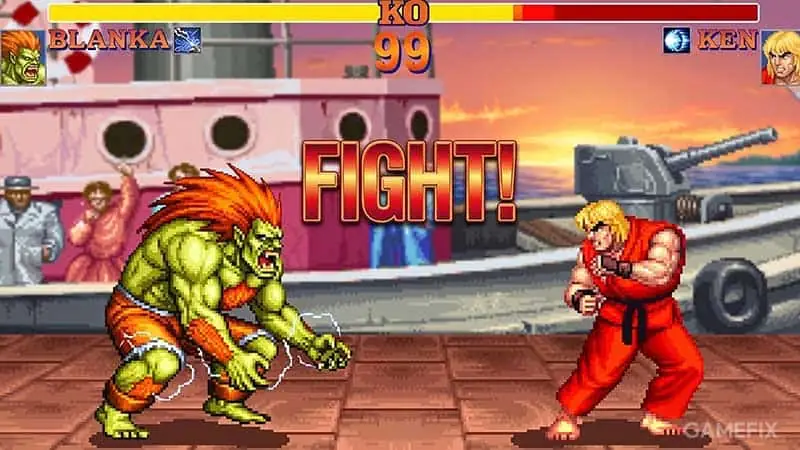
The greatest fighting games of all time are not necessarily the newest or the most technically advanced. The genre has been shaped by arcade classics, competitive games with decades-long communities, and releases that completely changed how fighting games were designed.
This list focuses on games that left a lasting mark through combat systems, character rosters, competitive play, accessibility, or influence on the genre. Some are still played seriously today, while others established ideas that modern fighting games continue to use.
Dragon Ball FighterZ
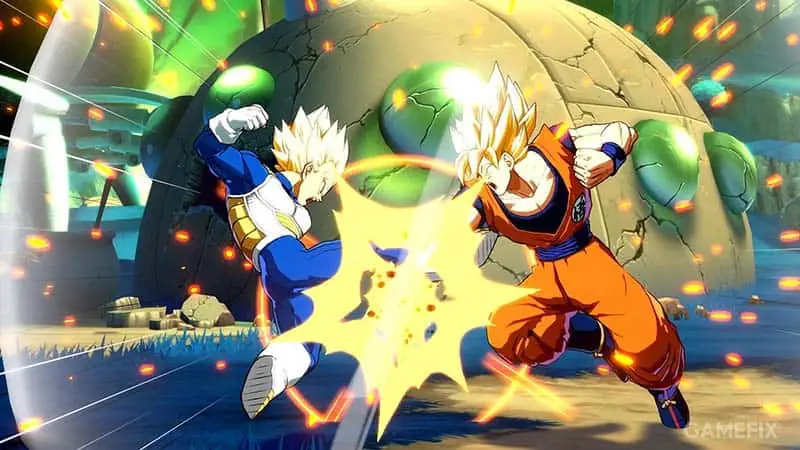
Dragon Ball had appeared in fighting games for years before FighterZ arrived, but few games captured the speed and spectacle of the anime this well. Its 3v3 tag battles let players build teams around assists, character synergy, and long combo sequences. The basics are also easy to understand, while experienced players can focus on pressure, movement, assists, and team composition.
The visual presentation remains one of its biggest strengths. Characters move between 3D models and anime-style poses so smoothly that many attacks look pulled directly from the series. Beneath that style is a serious competitive fighter, and FighterZ proved that a licensed anime game could satisfy both Dragon Ball fans and dedicated fighting game players.
Super Smash Bros. Ultimate
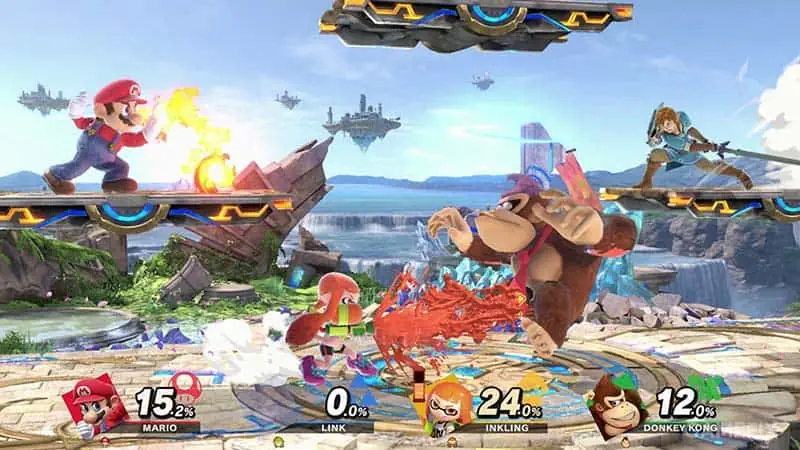
Super Smash Bros. Ultimate is enormous in scale, bringing together characters from Nintendo history alongside guests from Final Fantasy, Metal Gear, Street Fighter, Tekken, Minecraft, and Kingdom Hearts. However, the appeal goes far beyond the crossover itself. Smash uses damage percentages, platform movement, directional attacks, and ring-outs instead of traditional health bars.
That structure allows Ultimate to work at several levels. Four-player matches with items can become chaotic party games, while competitive one-on-one play places much more emphasis on movement, positioning, matchup knowledge, and recovery. Few fighting games offer this much content while remaining accessible to players who rarely touch the genre.
Mortal Kombat II
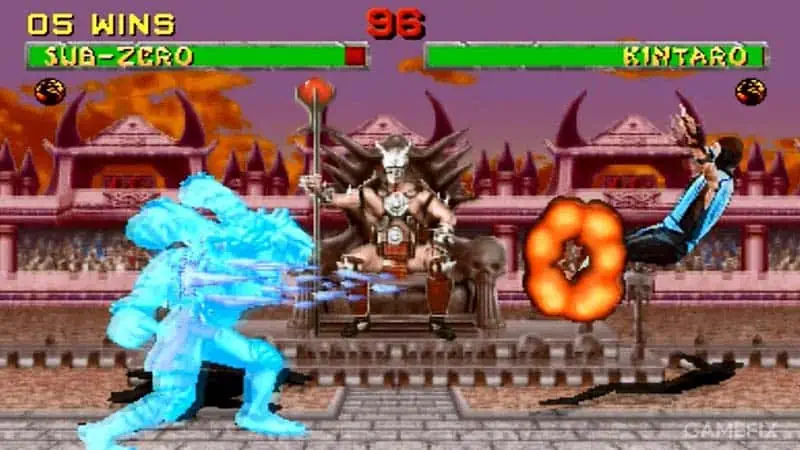
The original Mortal Kombat attracted attention with digitized actors and Fatalities, but Mortal Kombat II improved almost every part of that foundation. The roster expanded to twelve playable characters, while Fatalities became more elaborate. Friendships, Babalities, hidden fighters, and stage finishers also gave players more to discover.
Characters such as Kitana, Mileena, Kung Lao, and Jax joined returning fighters like Scorpion, Sub-Zero, Liu Kang, and Raiden. The sequel also expanded the mythology around Outworld and Shao Kahn. Later entries became mechanically deeper, but Mortal Kombat II remains one of the games that defined the identity of the series.
Soulcalibur II
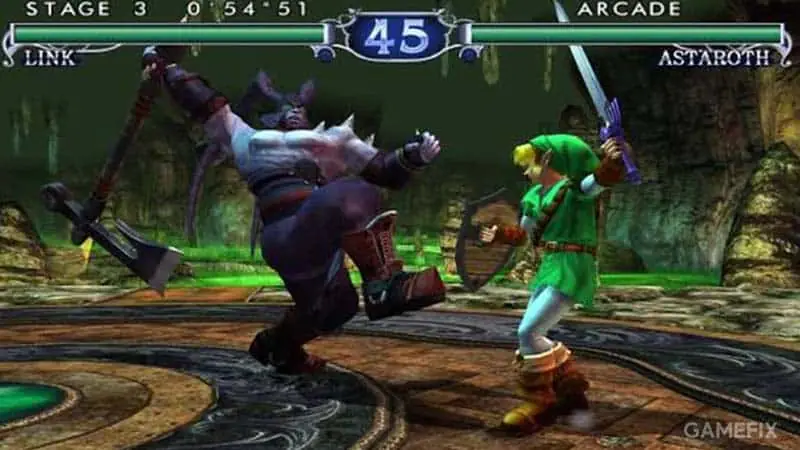
Weapons give Soulcalibur II a rhythm that most traditional fighting games do not have. Swords, staffs, axes, and other weapons change each character’s effective range, while eight-way movement lets players circle opponents instead of simply moving forward and backward. Positioning therefore becomes a major part of every fight.
The console versions became especially memorable because each one received a different guest character. Link appeared on GameCube, Spawn joined the Xbox version, and Heihachi represented PlayStation 2. Still, the game never depended on guest characters alone. Its responsive combat, varied roster, strong single-player content, and Weapon Master mode helped make it one of the standout weapon-based fighters of its era.
Virtua Fighter 2
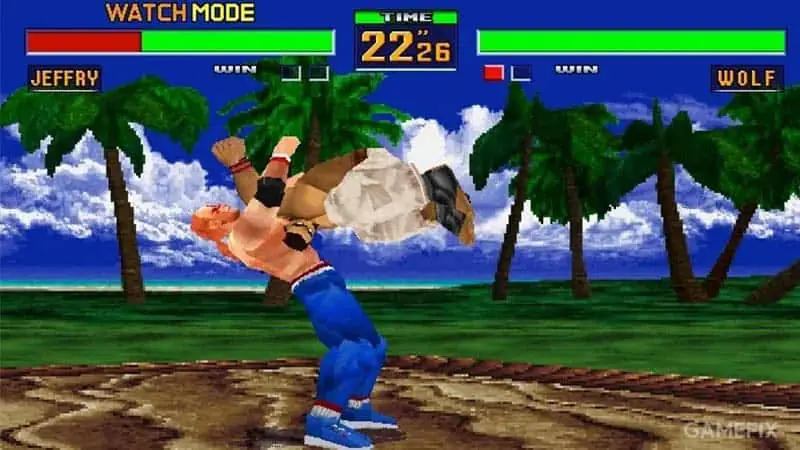
Virtua Fighter helped introduce 3D fighting, but Virtua Fighter 2 showed how much more the idea could become. The sequel increased the speed, improved animation, and made positioning more important. Its three-button control scheme looks simple at first, yet the systems underneath allow for highly technical matches built around throws, strikes, counters, and movement.
Unlike many fighting games of the era, Virtua Fighter 2 did not rely on projectiles or exaggerated special moves. Instead, it focused on timing and spacing. That grounded approach became a defining part of the series, while its combat design helped influence the future of competitive 3D fighting.
Marvel vs. Capcom 2
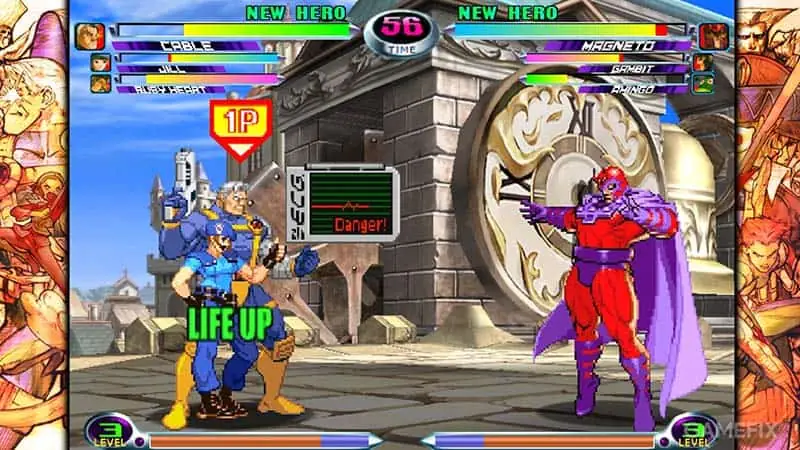
Marvel vs. Capcom 2 embraces chaos. Players choose three characters, switch between them during matches, and call teammates in for assists. Once these systems start working together, battles become incredibly fast, with air combos, projectiles, character swaps, assists, and screen-filling super attacks all happening within seconds.
The roster is another major reason the game became so popular. Street Fighter characters share space with Mega Man, Morrigan, Jill Valentine, Spider-Man, Wolverine, Doctor Doom, Magneto, and many others. Team construction and assist selection can completely change how a character works, giving the game a depth that helped it build a long competitive following.
Super Smash Bros. Melee
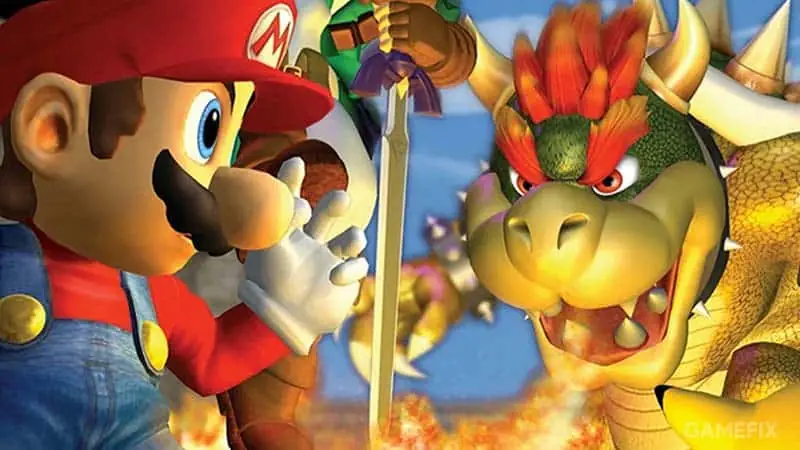
Super Smash Bros. Melee was designed as a faster and larger follow-up to the original game. Over time, players discovered techniques that pushed its systems far beyond what most people expected. Advanced movement, recovery, platform control, and precise timing created a competitive game with a very high skill ceiling.
That competitive community became one of Melee’s defining features. Tournament scenes began forming in the early 2000s, and the game later appeared at major events such as EVO. More than two decades after release, dedicated players still compete seriously. Adventure Mode, trophies, events, and multiplayer battles also helped make it one of the defining games of the GameCube era.
Street Fighter III: 3rd Strike
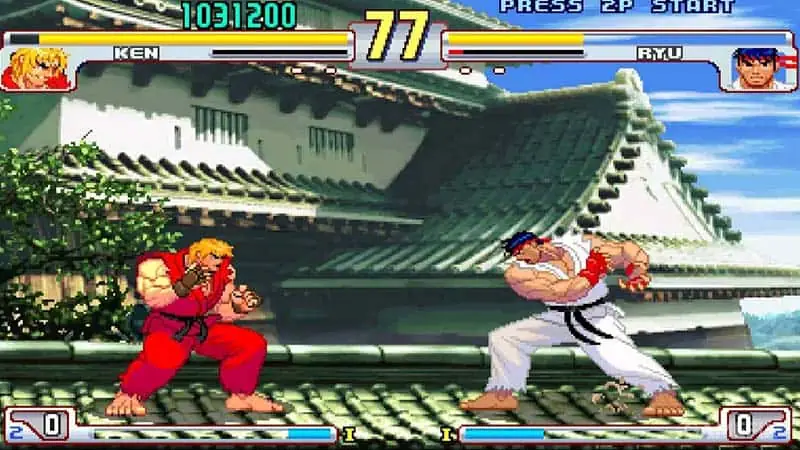
Street Fighter III: 3rd Strike rewards players who understand exactly when to attack, defend, and take risks. Its defining mechanic is the parry system, which allows players to avoid damage and immediately create an opportunity to respond by tapping toward an incoming attack at the right moment.
That mechanic gives high-level matches a unique sense of tension and helped create one of competitive gaming’s most famous moments at EVO 2004, when Daigo Umehara parried Justin Wong’s Super Art. 3rd Strike also benefits from expressive animation, a distinctive soundtrack, and a roster that feels very different from Street Fighter II.
Tekken 3
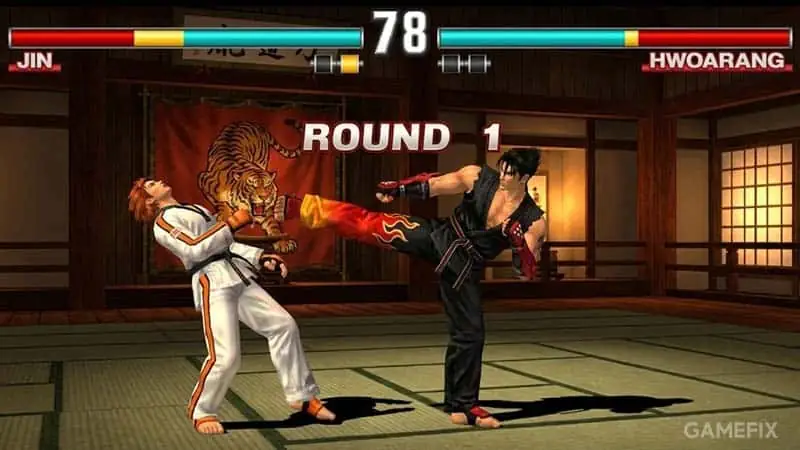
Tekken 3 took an already successful 3D fighting series and made almost every part of it feel faster and cleaner. Movement improved, animations became smoother, and sidestepping played a larger role in matches. The roster also introduced Jin Kazama, Hwoarang, Eddy Gordo, and Ling Xiaoyu, many of whom became permanent parts of the franchise.
The PlayStation version was especially impressive because it added substantial home-console content. Tekken Force offered a side-scrolling beat ’em up mode, while Tekken Ball turned fighting mechanics into a competitive minigame. Tekken 3 remains one of the defining fighting games of the original PlayStation era, and its influence can still be seen in later entries.
Street Fighter II
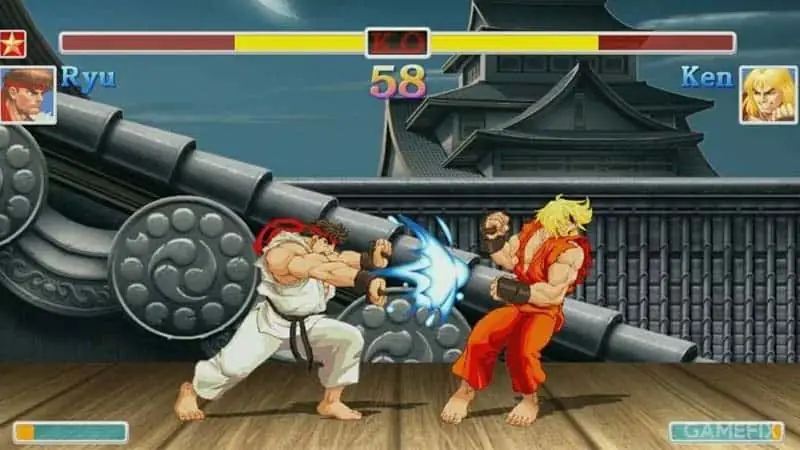
Putting Street Fighter II near the top is difficult to argue against because so much of the modern fighting genre can be traced back to it. Distinct characters, special moves, one-on-one rounds, spacing, matchups, and combo systems became core parts of fighting games after Street Fighter II proved how compelling those ideas could be.
Its success also changed the arcade landscape. Competing companies quickly started creating their own fighting games, helping drive the genre’s huge growth during the 1990s. Even the combo system came from an unintended interaction that players discovered and Capcom later embraced. Modern fighters are deeper in many areas, but Street Fighter II created a template that countless games have spent decades expanding.
BONUS: Killer Instinct
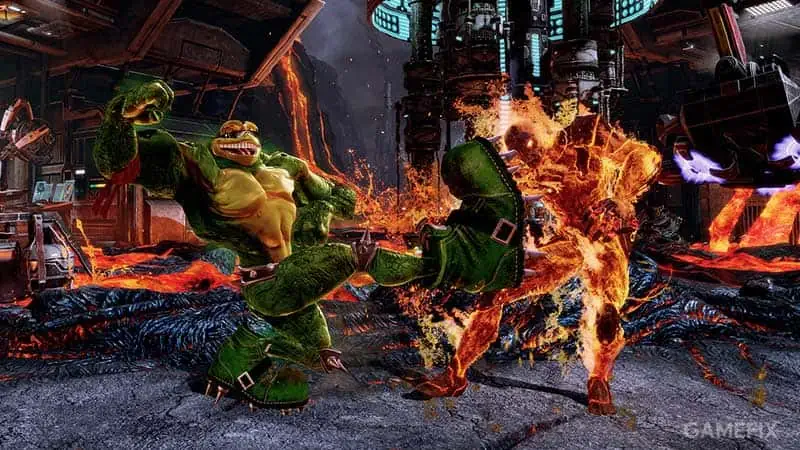
Killer Instinct entered a market already dominated by Street Fighter and Mortal Kombat, but it quickly developed its own identity. Its biggest contribution was an aggressive combo system built around long attack sequences, Combo Breakers, and dramatic announcer reactions. That presentation made matches feel intense even when players were still learning the basics.
Characters such as Jago, Fulgore, Orchid, and Sabrewulf became closely associated with the series. The original game borrowed familiar ideas from other fighters, but it combined them in a way that felt noticeably different. Killer Instinct may not have the same influence as Street Fighter II, but its style and combo system still earned it a memorable place in fighting game history.

