


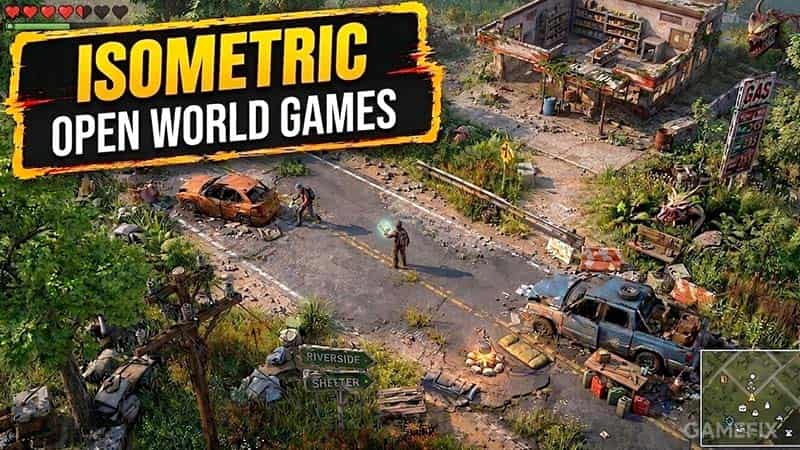
Isometric open world games can offer far more freedom than their fixed or angled camera might suggest. Some are built around survival, while others focus on combat, exploration, role-playing, or complete player freedom.
The perspective also works especially well for games with large maps. You can read the environment clearly without losing the feeling that there is still plenty left to discover.
This list brings together 10 isometric open world games that use that structure in very different ways. Some give you a story to follow. Others simply drop you into a world and let you decide what happens next.
Why Isometric Open World Games Work So Well
An isometric camera gives you a wider view of the area around your character. That naturally helps with combat, exploration, base building, and tactical movement.
More importantly, it does not mean the world has to feel small. Developers can still build large maps, interconnected regions, and open-ended systems around the same perspective.
That flexibility is one reason isometric open world games work so well across RPGs, survival games, and action-heavy sandboxes.
Project Zomboid
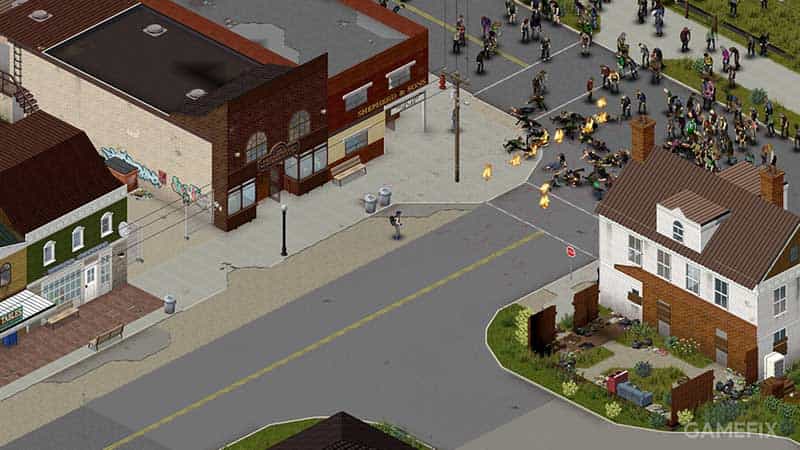
Project Zomboid turns a zombie apocalypse into one of the most detailed survival sandboxes available.
Its map is huge, towns connect naturally, and almost every building can become either a temporary safe house or a serious problem. Survival depends on far more than killing zombies. Hunger, injuries, fatigue, weather, vehicle condition, noise, and even the condition of your clothing can affect a simple supply run.
The isometric view makes streets, interiors, and approaching hordes easy to read. More importantly, the game never tells you how to survive. You can settle down, keep moving, build a base, or simply see how long you last.
V Rising
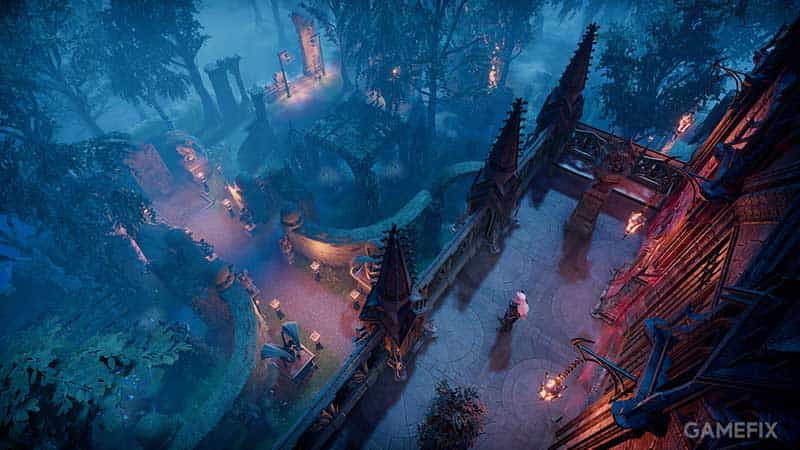
V Rising takes the open-world survival formula and rebuilds it around being a vampire.
You begin weak and gradually regain your strength by hunting powerful targets across forests, farms, towns, and cursed regions. Blood types provide different bonuses, while defeated bosses unlock abilities, crafting options, and new technology.
Castle building plays a major role as well. Your base grows alongside your character and eventually becomes the center of progression.
The isometric camera suits the fast combat particularly well. Abilities remain readable even when fights become crowded. Sunlight also changes how you travel, turning shadows and time of day into part of the survival loop.
Fallout 2
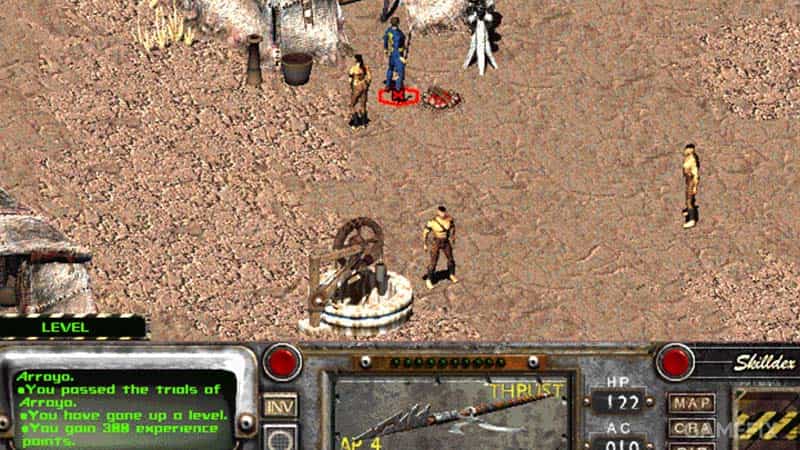
Fallout 2 still shows how much freedom an isometric RPG can give the player.
As the Chosen One, you leave your village to search for the Garden of Eden Creation Kit. That objective quickly grows into a much larger journey across a post-nuclear wasteland filled with settlements, factions, companions, and side stories.
Skills and decisions can completely change how situations play out. Combat is turn-based, but exploration remains flexible and rarely pushes you directly toward the main story.
You can wander, get involved in local problems, build relationships, or make decisions that change entire communities. That freedom is a big reason Fallout 2 still holds up.
Disco Elysium
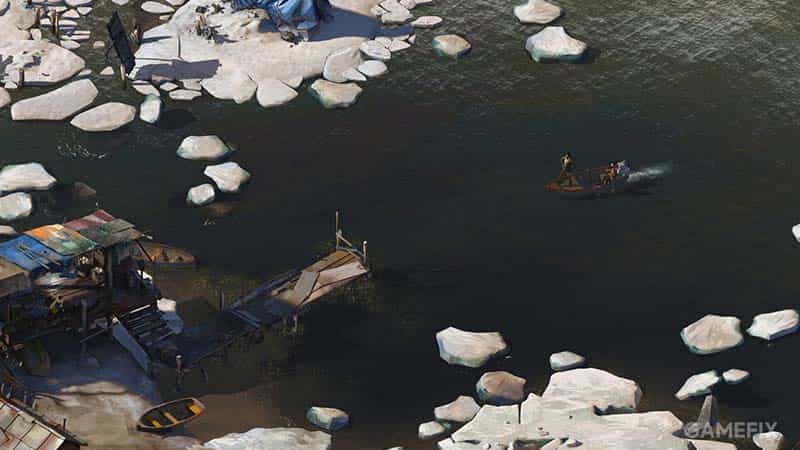
Disco Elysium removes traditional combat and replaces it with investigation, conversation, and character development.
You play an amnesiac detective trying to solve a murder in Revachol while also figuring out what happened to his own life.
The city is more compact than most open worlds, but the game gives you plenty of freedom inside it. Side cases, political conversations, hidden locations, and personal decisions constantly create new paths.
Your skills even behave like voices inside the detective’s head. Sometimes they help. Sometimes they make a situation much worse.
The isometric view fits the slower pace perfectly and keeps the focus on people, environments, and choices rather than constant action.
The Ascent
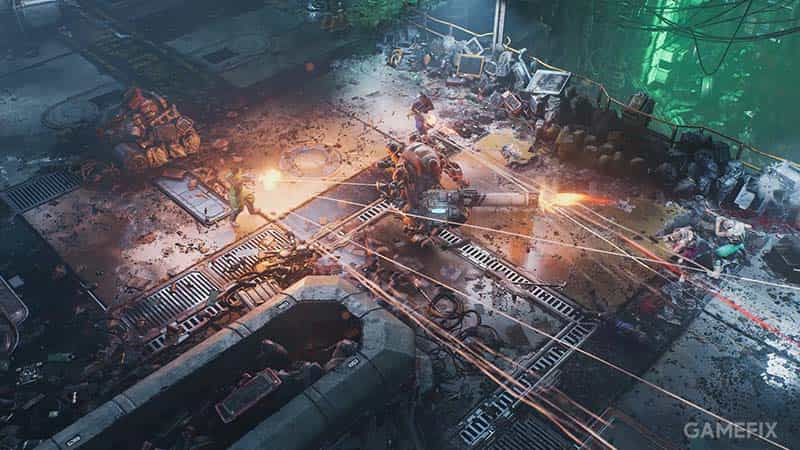
The Ascent combines isometric shooting with a dense cyberpunk world full of vertical districts, industrial zones, crowded hubs, and hidden routes.
Combat is fast and built around firearms, augmentations, cover, and special abilities. Between fights, you can explore different districts, take side missions, improve equipment, and return to earlier areas with better gear.
Its world is not one huge seamless wilderness, but the interconnected districts still create a strong sense of freedom.
What makes it interesting is how much detail sits outside the main path. Markets, back alleys, elevators, and lower levels make the city feel larger than a simple mission map.
HumanitZ
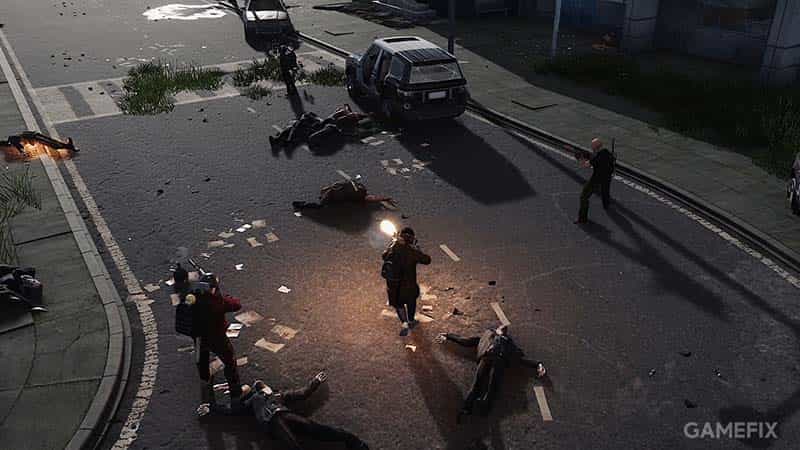
HumanitZ is built specifically around isometric open-world survival.
Civilization has collapsed after a zombie outbreak, leaving you to scavenge towns, search rural areas, build shelters, and defend yourself from infected groups.
Combat is only part of the job. Farming, fishing, crafting, hunting, and base building give you longer-term reasons to stay alive rather than simply moving from fight to fight.
The open world lets you decide where to settle and how much risk you want to take when entering populated areas.
Its camera angle becomes especially useful when things go wrong. A quiet scavenging trip can turn into a large fight very quickly, and seeing what is approaching matters.
Seven Enhanced Edition
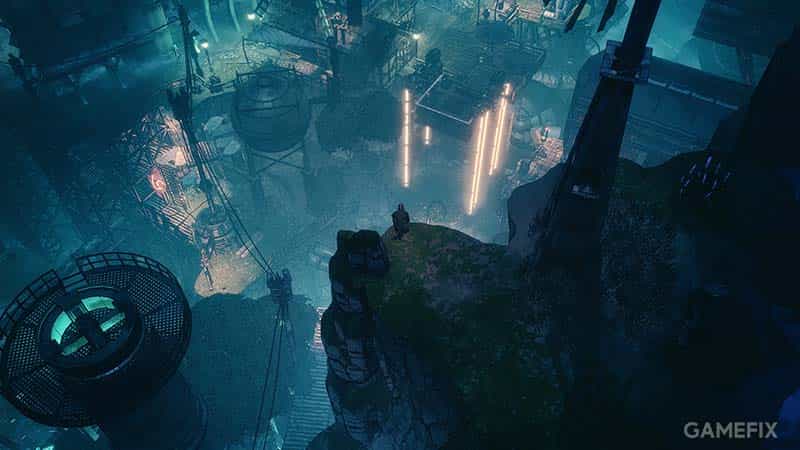
Seven: Enhanced Edition mixes isometric exploration with stealth, parkour, and RPG systems.
You play as master thief Teriel, who is sent to the prison island of Peh. The mission soon becomes much larger than expected, but the island itself opens up early.
You can climb structures, sneak through restricted areas, use disguises, search for alternate routes, or simply fight when stealth fails.
Its vertical design is what separates it from many other isometric RPGs. Rooftops, higher platforms, and hidden paths are often part of exploration rather than decoration.
The Enhanced Edition also includes the Drowned Past expansion, adding more locations and story content.
DYSMANTLE
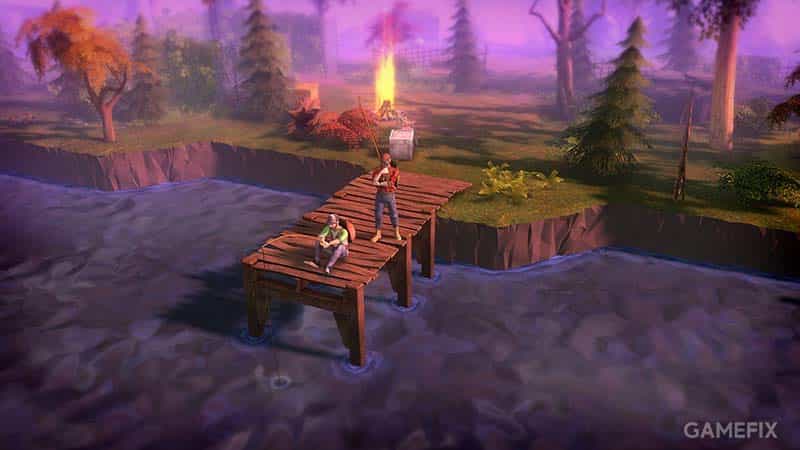
DYSMANTLE builds almost its entire progression system around one simple idea: nearly everything can eventually be destroyed for materials.
New tools let you break stronger objects, which leads to better resources, stronger equipment, and access to areas that were previously out of reach.
The open world mixes ruined towns, wilderness, puzzles, tombs, farming, fishing, and hostile creatures without forcing you into a strict route.
Exploration naturally feeds into crafting. A building that looks useless at first may later become valuable because your equipment has improved enough to dismantle it.
That loop gives even ordinary locations a reason to be explored again.
Beyond the Map
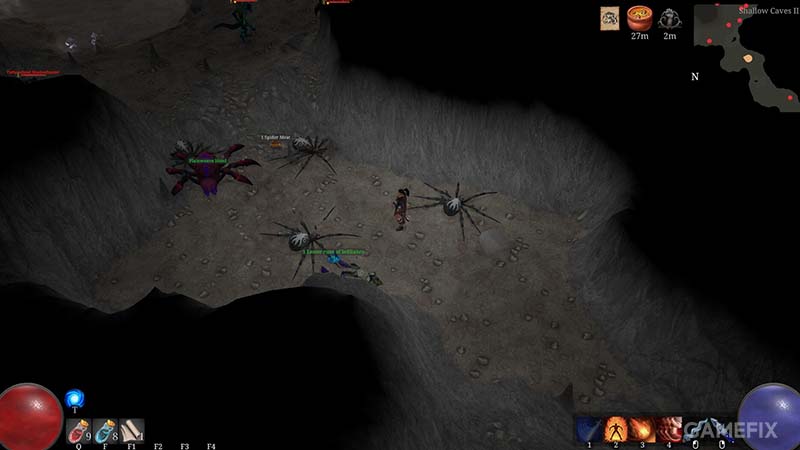
Beyond the Map combines survival crafting with an isometric action RPG inside a procedurally generated fantasy world.
After surviving a shipwreck, you begin gathering resources, building a base, exploring unfamiliar regions, and searching for stronger equipment.
Character growth is not locked into traditional classes. Skills improve over time, while rare spellbooks can unlock new abilities.
Different biomes bring their own enemies, materials, and dangers. Crafting professions also let you improve weapons, armor, potions, and other useful equipment.
Progress is built around travelling farther from safety and preparing yourself for areas that are more dangerous than the last.
Kenshi
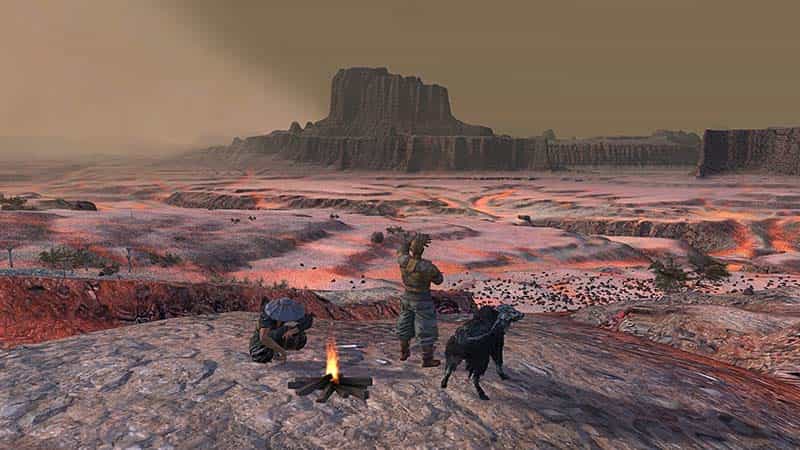
Kenshi gives you very little direction, and that is exactly why it works.
There is no fixed hero role, no mandatory story path, and no single way to play. You can become a trader, thief, farmer, rebel, warlord, explorer, or simply try to keep a small squad alive.
Characters improve by actually doing things. They become stronger through work, combat, injuries, and survival rather than traditional level-up screens.
Settlements, factions, slavery, base building, large battles, and economic systems can all become part of your story.
The isometric-style camera also fits its squad-based design naturally. Failure is rarely the end. Sometimes it simply creates a new direction.
The Best Isometric Open World Games Give You Freedom
The strongest isometric open world games prove that camera perspective does not need to limit exploration.
Project Zomboid and HumanitZ focus heavily on survival. Fallout 2 and Disco Elysium lean toward role-playing and player choice. Kenshi goes even further by giving you almost complete freedom to create your own story.
That variety is what keeps this style interesting.
These games may share a similar camera angle, but the worlds behind that perspective can feel completely different.

